

Travelling to Europe? You have struck gold, with a wealth of cities to explore, each with a fascinating past and its own distinct culture. But some can also set you back a small fortune after factoring in well-located accommodation, restaurant bookings, and attraction entry fees.
Prices for trips to popular places like Paris, London and Stockholm continue to rise, causing some visitors to pay as much as they would at a high-end beach resort.
The most expensive cities tend to be among some of the most popular, too. Selecting a city that you may not have heard much about doesn’t just make the thrill of discovering new landmarks, people, and cuisine more enticing; stepping off the usual tourist trail also leaves behind large crowds – all the while receiving a culture-packed long weekend away for likely half the price.
Kosovo’s capital Pristina is young and vibrant, Poland’s Łódź is a city with an impressive cinematic history, while Chișinău in Moldova blends urban life with an unusually high amount of green space.
We created our list using Numbeo’s cost of living index, discovered where in Europe is the cheapest to visit and picked out our favourites from the list we believe would make an enriching city break.
While looking at crucial factors such as the price of a beer and the cost of public transport, we also checked Skyscanner’s recommendations for the cheapest month to fly.
As a result, we have rounded up our favourite affordable city breaks in Europe that offer just as much to see and do as some of the biggest capitals on the continent.
1. Pristina, Kosovo
- Cost of an inexpensive meal: €5.50 (£4.73)
- Cost of a beer: €2.50 (£2.15)
- Cost of a coffee: €1.60 (£1.37)
- Cost of a one-way ticket on public transport: €0.50 (43p)
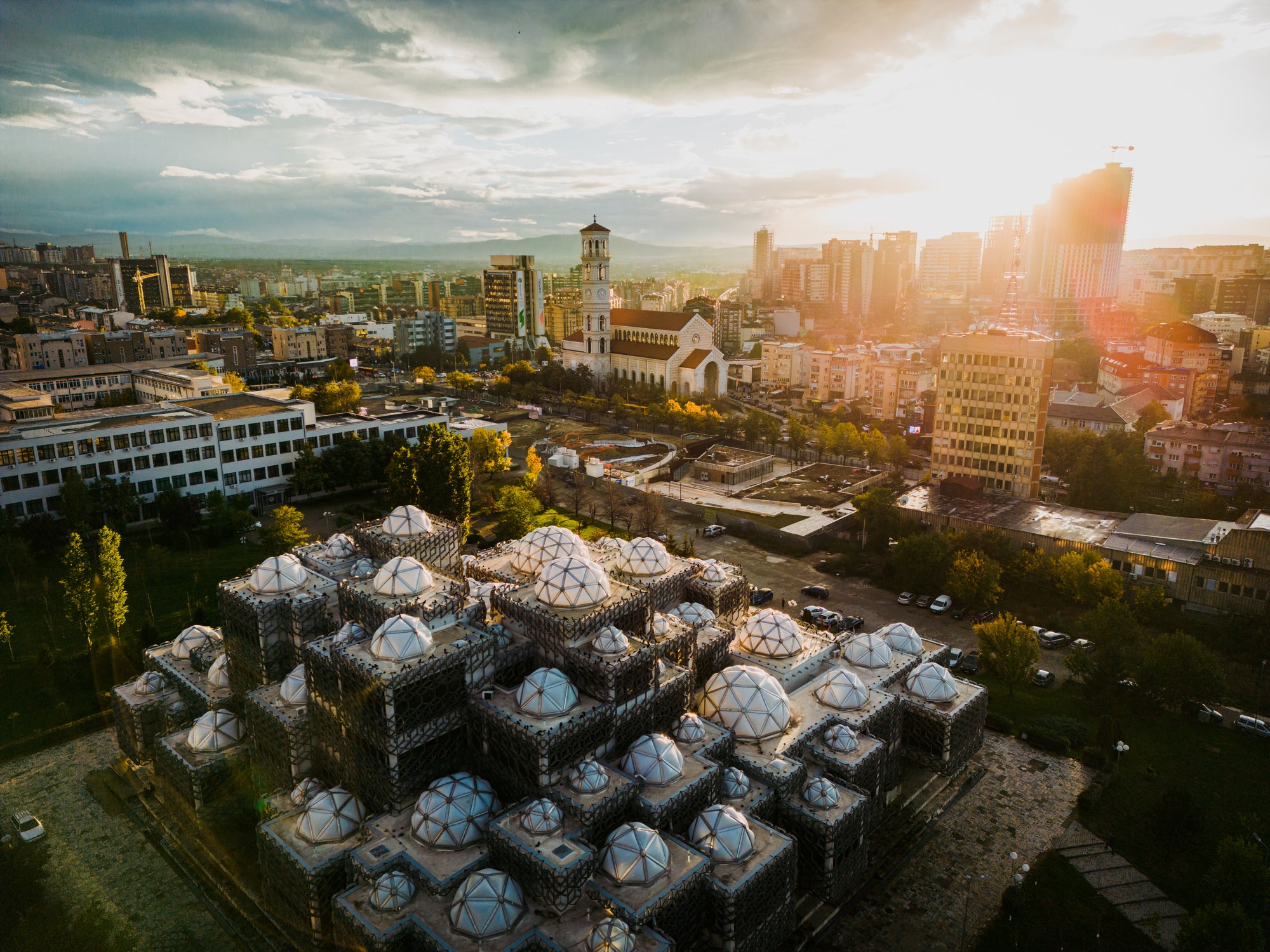
Perhaps one of the most overlooked city breaks in Europe, Pristina is the best-kept secret among budget-conscious travellers and its youthful residents who give the Kosovan capital its energetic air. More than half of Kosovars are under 30, meaning nightlife has flourished, with clubs such as Zone and Gate among some of the most well-known. By day, locals opt for trendy spots like Soma Book Station, a restaurant-cum-library where cheese plates, burgers or bowls of pasta can be devoured for under £10 while browsing books. Kafet e Rakisë, a well-known street in Pristina, is where travellers will find people conversing with friends over raki or coffee, depending on the time of day, at traditional bars.
The Newborn Monument, a typographic sculpture near the city centre, commemorates Kosovo’s 2008 declaration of independence from Serbia, becoming Europe’s youngest country. More can be learned about the country’s history and Kosovar culture in preserved Ottoman houses at the free-to-visit Ethnographic Museum. For more sightseeing, the formidable National Library of Kosovo is worth a picture: a series of concrete blocks and domes that look as if it has been caught in a giant metal fishing net. Religious buildings, such as the Imperial Mosque and the Cathedral of Saint Mother Teresa, can also be visited, with the latter allowing visitors up its bell tower for city views for around £1.70.
How to do it
Wizz Air and easyJet currently operate flights out of London Luton airport to Pristina. The cheapest month to fly is November from £53 return.
Short-term rentals are available in Pristina, but if you are seeking a well-known brand name for a reasonably low price, Mercure Pristina City has spacious rooms in the heart of the city within walking distance of most major attractions.
Price: From £68
Read more: Why I fell for the ‘ugly’ city social media told me to skip
2. Skopje, North Macedonia
- Cost of an inexpensive meal: 500 denari (£6.98)
- Cost of a beer: 170 denari (£2.37)
- Cost of a coffee: 114.84 denari (£1.60)
- Cost of a one-way ticket on public transport: 40 denari (56p)
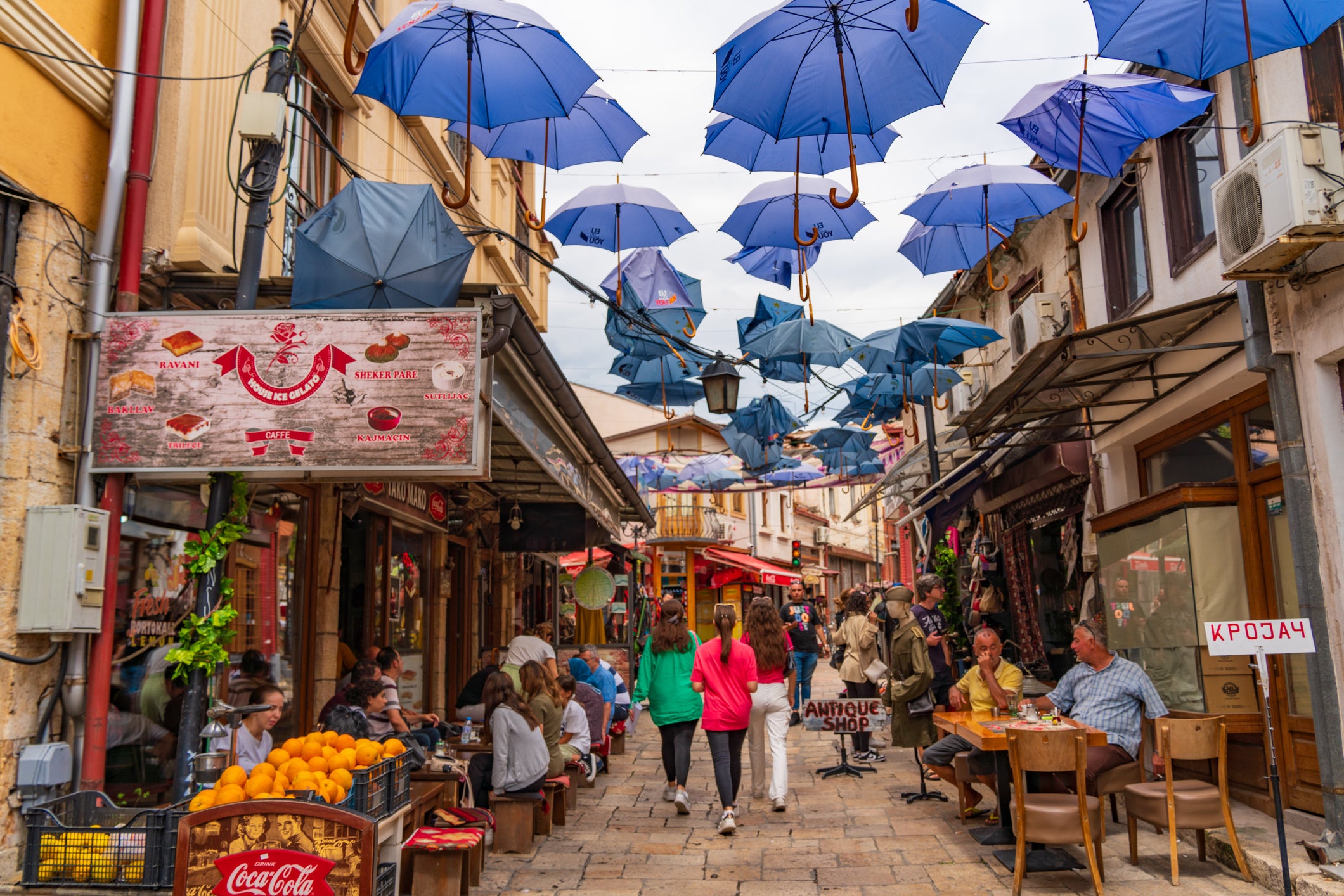
Traces of culture from dozens of historical eras shape what North Macedonia’s capital, Skopje, is today, from Roman remains and Ottoman heritage to socialist-era modernism, making for a city break with endless exploration. The city is split by the Vardar River, separating much of its historical attractions from the modern centre on the southern side. On the eastern bank of the river is where visitors will find the Old Bazaar, one of the oldest and largest marketplaces in the Balkans, selling everything from traditional Turkish coffee to local art and gold jewellery. Near the bazaar are the remains of the sixth-century Kale Fortress, situated on the highest point of the city, which is free to walk around.
The city is home to some poignant museums, which cost very little to visit. The Museum of the City of Skopje occupies an old train station where the fingers of the clock remain frozen in time – 5.17am when a devastating earthquake struck the capital in 1963, killing over 1,000 people. Admission is free, with exhibitions detailing the tragedy around the earthquake and other important events in North Macedonia’s history. Likewise, the Museum of the Macedonian Struggle for Independence, which costs just over £4, tells the story of the national revolutionary period, the establishment of Yugoslavia and the World Wars.
How to do it
Wizz Air is the only UK airline to fly to Skopje, with departures from London Luton airport. The cheapest month for a return flight is currently December from £55.
Nordic Hostel is a highly-rated place to stay, with beds under £30 a night, with a choice of private rooms or dormitories with capsule-style bunks. Some rooms come with a balcony, while all guests have access to its inner courtyard garden with places to relax.
Price: From £23
Read more: European countries that do not have EES for holidays
3. Chișinău, Moldova
- Cost of an inexpensive meal: 200 lei (£32.72)
- Cost of a beer: 40 lei (£6.54)
- Cost of a coffee: 38.88 lei (£6.36)
- Cost of a one-way ticket on public transport: 7 lei (£1.15)
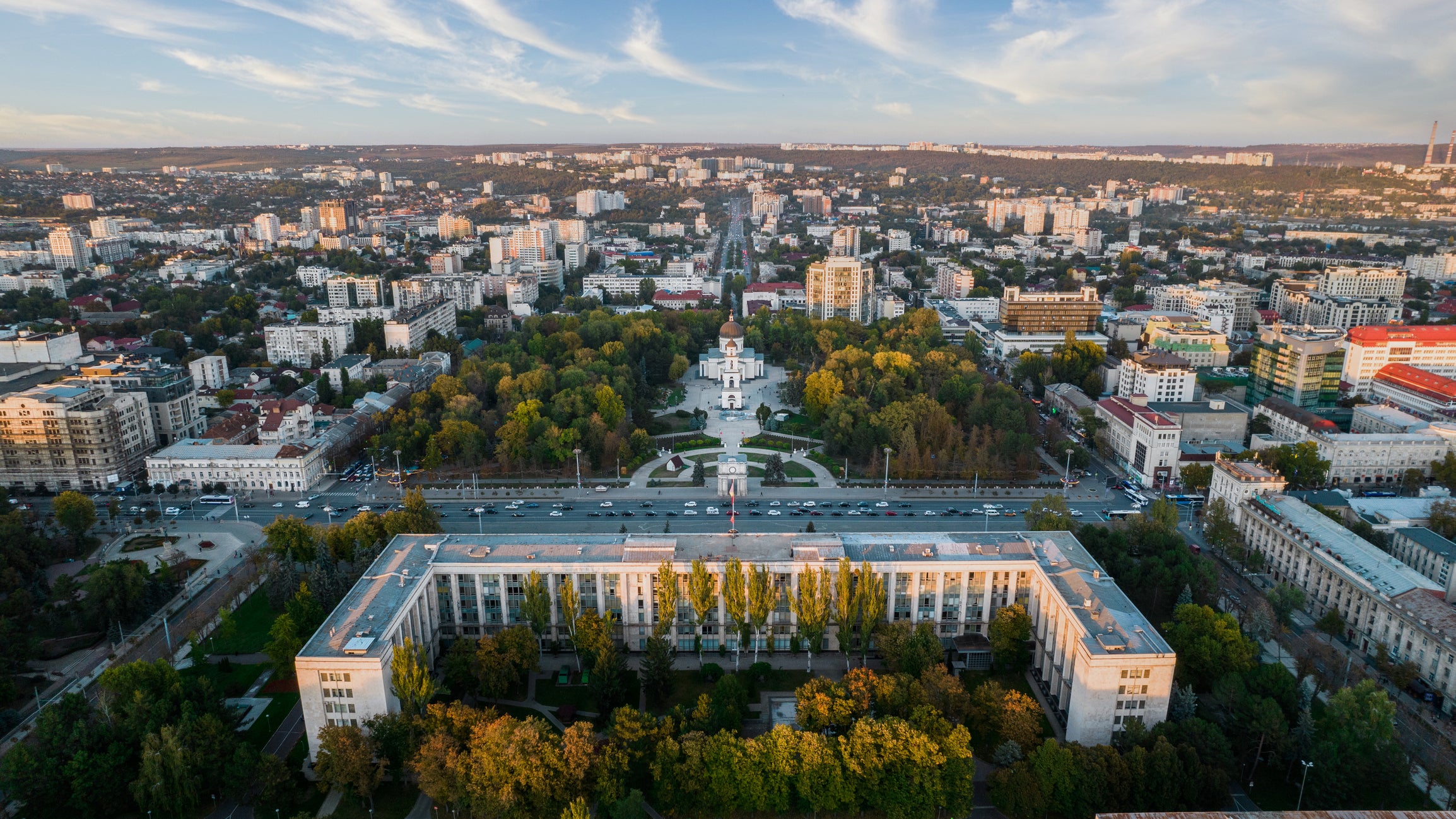
Some visitors to Moldova may be more attracted to its countryside, where acres of vineyards cultivate local grapes across its wine regions, but the country’s capital, Chișinău, is not to be overlooked. The city may be best known for its Soviet-era architecture built from white limestone rising up between a huge selection of green spaces. In fact, the city is regarded as one of the greenest cities in Europe, with its 23 lakes and popular parks such as Stefan cel Mare Central Park, Valea Morilor and the Stefan cel Mare Public Garden, all of which are free to amble around. There is one park which is ticketed to get in, but for the low price of £1.60 for an adult entrance fee, it is worth a visit to Dendrarium Park to see its impressive collection of botanical plants and rare trees.
Other city highlights include exploring its architecture on foot, including the neoclassical Nativity Cathedral and the almost 200-year-old Triumphal Arch, which was built to celebrate the Russian victory over the Ottoman Empire. Delving deeper into Moldovan culture, a trip to the National Museum of History costs £2 per ticket, while traditional cuisine such as stuffed cabbage leaves and meat platters at popular restaurant La Taifas, with some main dishes coming in at £7.
How to do it
Flights to Chișinău from the UK can be caught from London Luton and London Gatwick airports with Wizz Air. The cheapest time to fly is November for £31 return flights.
There are plenty of well-known international hotel brands in the city, such as ibis, Marriott and Radisson, but for something a little cheaper, it’s best to go boutique. Hotel Tulip Residence & Spa sits on the edge of a small forest area in the city and has a small swimming pool, a hammam and a restaurant that serves Thai and European dishes.
Price: From £37
Read more: Five cheap European cities to visit this autumn, according to a travel expert
4. Podgorica, Montenegro
- Cost of an inexpensive meal: €10 (£8.59)
- Cost of a beer: €2.80 (£2.41)
- Cost of a coffee: €2.25 (£1.93)
- Cost of a one-way ticket on public transport: €1.50 (£1.29)
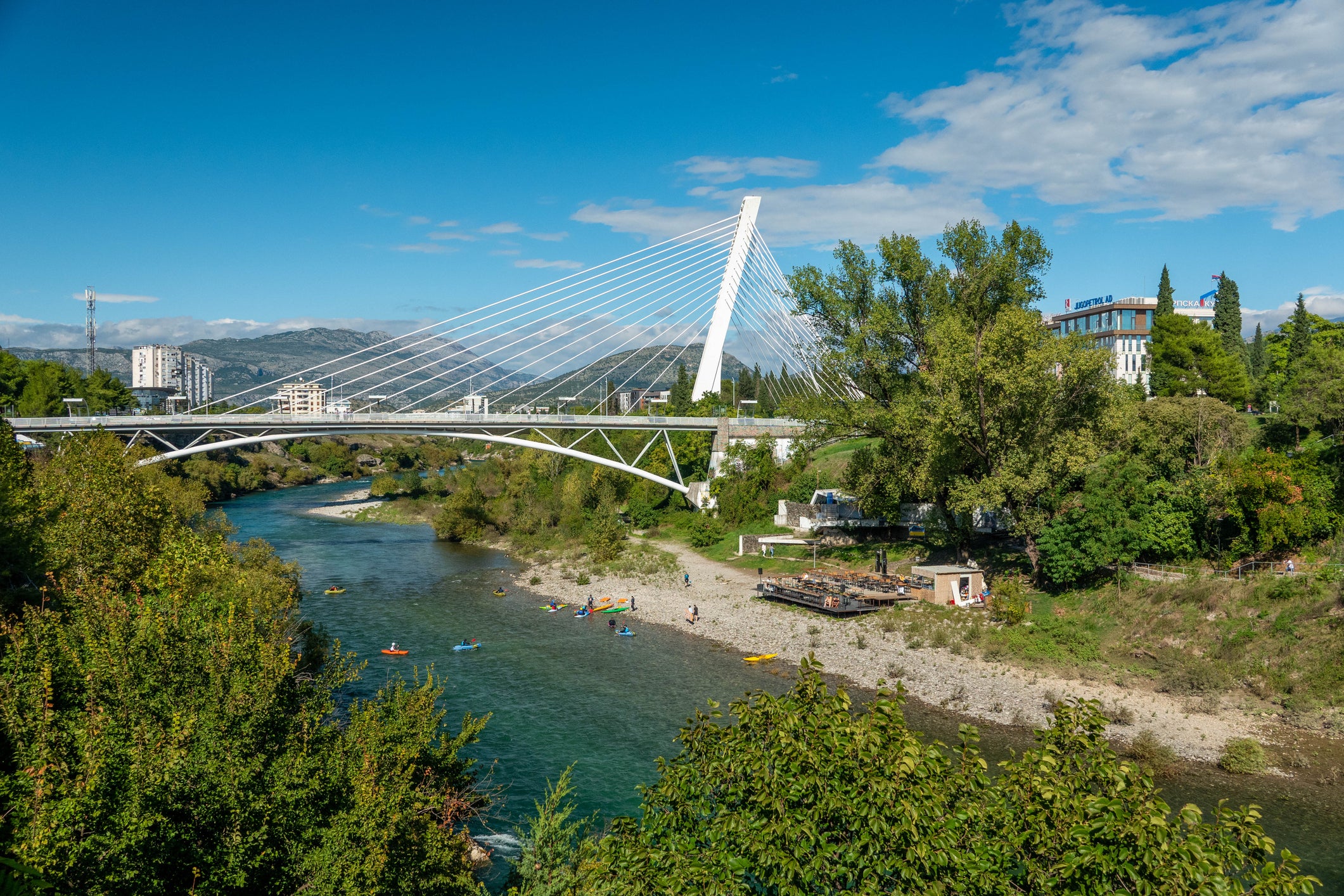
The capital of Montenegro, Podgorica, sits on a flat plain encircled by mountains. The country’s coastal resorts, such as the breathtaking Bay of Kotor, are far more popular with tourists, which leaves the inland capital often overlooked and usually not at the top of travel bucket lists. For some, this makes exploration all the more exciting, and a lot cheaper too, as there are no crowds to wade through to the next attraction.
Podgorica’s Old Town is lined with narrow alleys where some of the few remaining Ottoman structures that survived World War II still stand, including mosques and a famous 17th-century clock tower. While there isn’t an abundance of attractions here, visitors can indulge in the slow-paced social ritual of sipping cups of coffee slowly, paying at most £2.50 for the pleasure. Oliva is one of the most popular cafe choices. Many locals also head to the banks of the rivers that flow through the city, with the most favoured picnic spot at the confluence of the two main bodies of water, the Morača and the Ribnica. Niagara Waterfall is also a popular nature spot just outside the city centre, with a nearby restaurant to enjoy views of the river from.
How to do it
Catch a flight with Ryanair from Stansted airport and Wizz Air from Gatwick airport to Podgorica’s aviation hub. The cheapest month to fly right now is November, from £37 return.
The four-star Signum Hotel Podgorica has rooms with balconies and views across Podgorica, elevated on high floors away from any city noise. The hotel also has a rooftop restaurant, a gym, and a sauna.
Price: From £75
Read more: Hyatt Regency Kotor Bay Resort, Montenegro, hotel review
5. Sarajevo, Bosnia and Herzegovina

- Cost of an inexpensive meal: 15KM (£6.59)
- Cost of a beer: 5KM (£2.20)
- Cost of a coffee: 4KM (£1.76)
- Cost of a one-way ticket on public transport: 2.20KM (97p)
Bosnia and Herzegovina’s capital, Sarajevo, is one of Europe’s cheapest destinations to visit, with flights at their lowest during the winter months. The city has a huge coffee scene, with locals starting the day with a hot cup of strong, unfiltered coffee brewed in a copper pot (džezva). The drink here is very cheap, so visitors can sample plenty – start at the cafes in the Baščaršija bazaar. Also found here are staples such as ćevapi kebab and pot stew lonac.
Aside from its coffee culture, visitors can learn more about Sarajevo’s complex history through some of its top attractions, including the Ottoman-era Gazi Husrev-Beg Mosque, which can be visited for £1.30, as well as the Tunnel of Salvation museum (£9), which focuses on the 1990s siege of the city.
The War Childhood Museum (£6.60), which spotlights children’s wartime experiences in Bosnia and around the world, is also highly recommended. More light-hearted activities include a trip into the mountains on the Sarajevo cable car (£9 one way), or observing the streets below at sunset from the Yellow Fortress.
How to do it
Ryanair and Wizz Air have direct flights to Sarajevo from London. November is currently the cheapest month to fly (from £45 return.)
There are plenty of hostels to stay in and apartments that can be let for a weekend in Sarajevo for a low price. If staying in a hotel is preferable, Hotel Aziza is a popular choice that is only a 15-minute walk away from Baščaršija.
Price: From £54
Read more: Greenland is notoriously expensive. I tried to visit on a shoestring
6. Bucharest, Romania
- Cost of an inexpensive meal: 65 lei (£10.60)
- Cost of a beer: 18 lei (£2.94)
- Cost of a coffee: 16.37 lei (£2.70)
- Cost of a one-way ticket on public transport: 4 lei (65p)
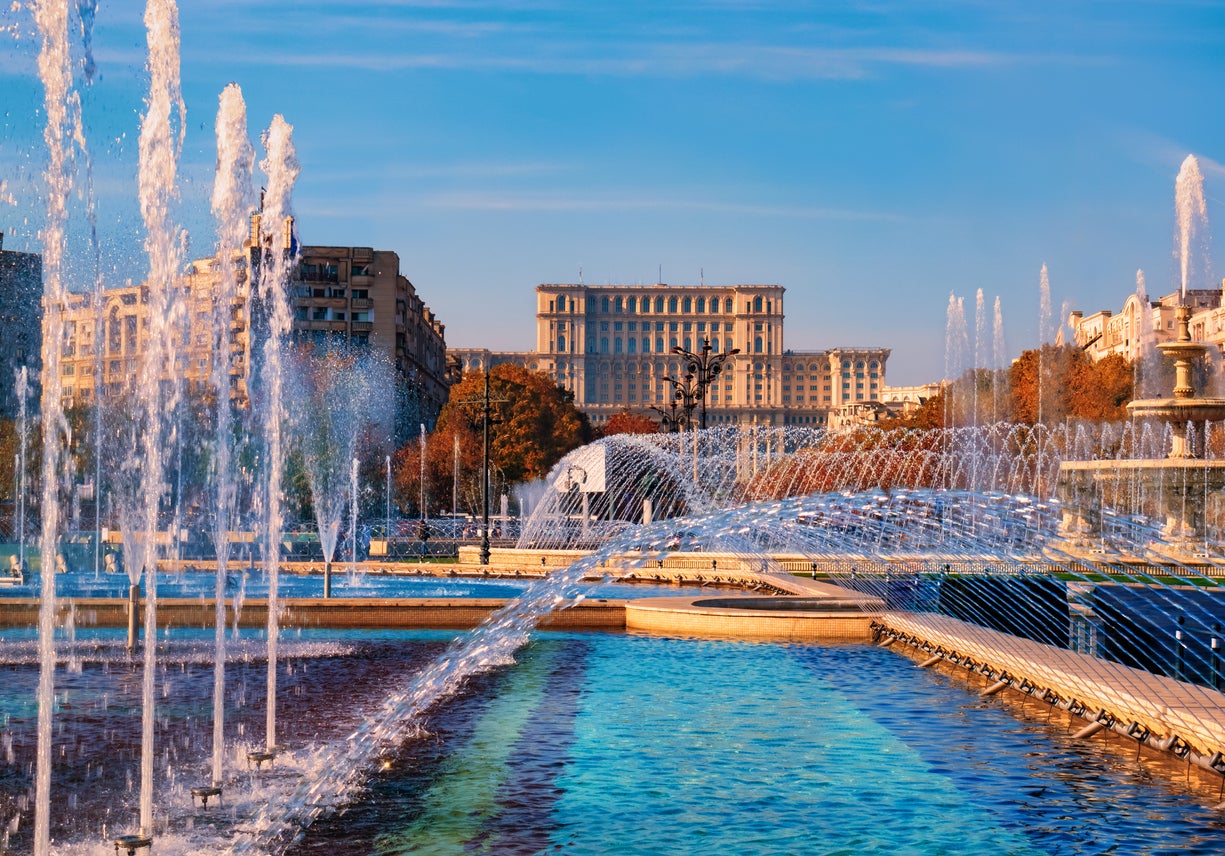
Those looking to book a spa break in Europe but don’t have the budget to book a luxury resort should consider the Romanian capital. Therme Bucharest is one of the city’s most popular wellness centres, featuring mineral pools, saunas, treatment rooms and a series of bars and restaurants. The most expensive package sits at around £35.50, while three-hour sessions can be as little as £12.
But Bucharest has much to offer beyond relaxation. Its lively student population has filled streets with affordable and diverse bars and clubs, ideal for a cheap party weekend away.
While inexpensive drinking or day spas are tempting, visitors should also make time for the city’s historic and cultural offerings. The free Walkabout tour, highly rated among tourists, allows visitors to hit all the main attractions in one go, such as the historical centre, the oldest beer house in town and Revolution Square, a historically significant plaza that is also home to the former Royal Palace and the neoclassical Romanian Athenaeum (£2.45).
How to do it
Ryanair, Wizz Air, British Airways and other major airlines all run flights from the UK to Bucharest. The cheapest time to fly is currently October from £32 return.
Book a room at the boutique Peakture Hotel, an accommodation that is situated near Bucharest’s Old Town, complete with stylish rooms and a wine bistro.
Price: From £70
Read more: The city break with £2 pints and one of the world’s best spas
7. Braga, Portugal
- Cost of an inexpensive meal: €10 (£8.79)
- Cost of a beer: €3 (£2.58)
- Cost of a coffee: €1.69 (£1.45)
- Cost of a one-way ticket on public transport: €1.55 (£1.33)
Often considered the “Rome of Portugal”, this lesser-visited third city is often passed over for Porto and Lisbon, which turns out to be rather beneficial for tourists who do visit, as prices are low and crowds are sparse.
While the city represents over 2,000 years of history, Braga has a large youth culture due to the universities found here, causing a creative scene to thrive, with studios and exhibitions such as the Zet Gallery and Mário Sequeira Gallery, both with free admission.
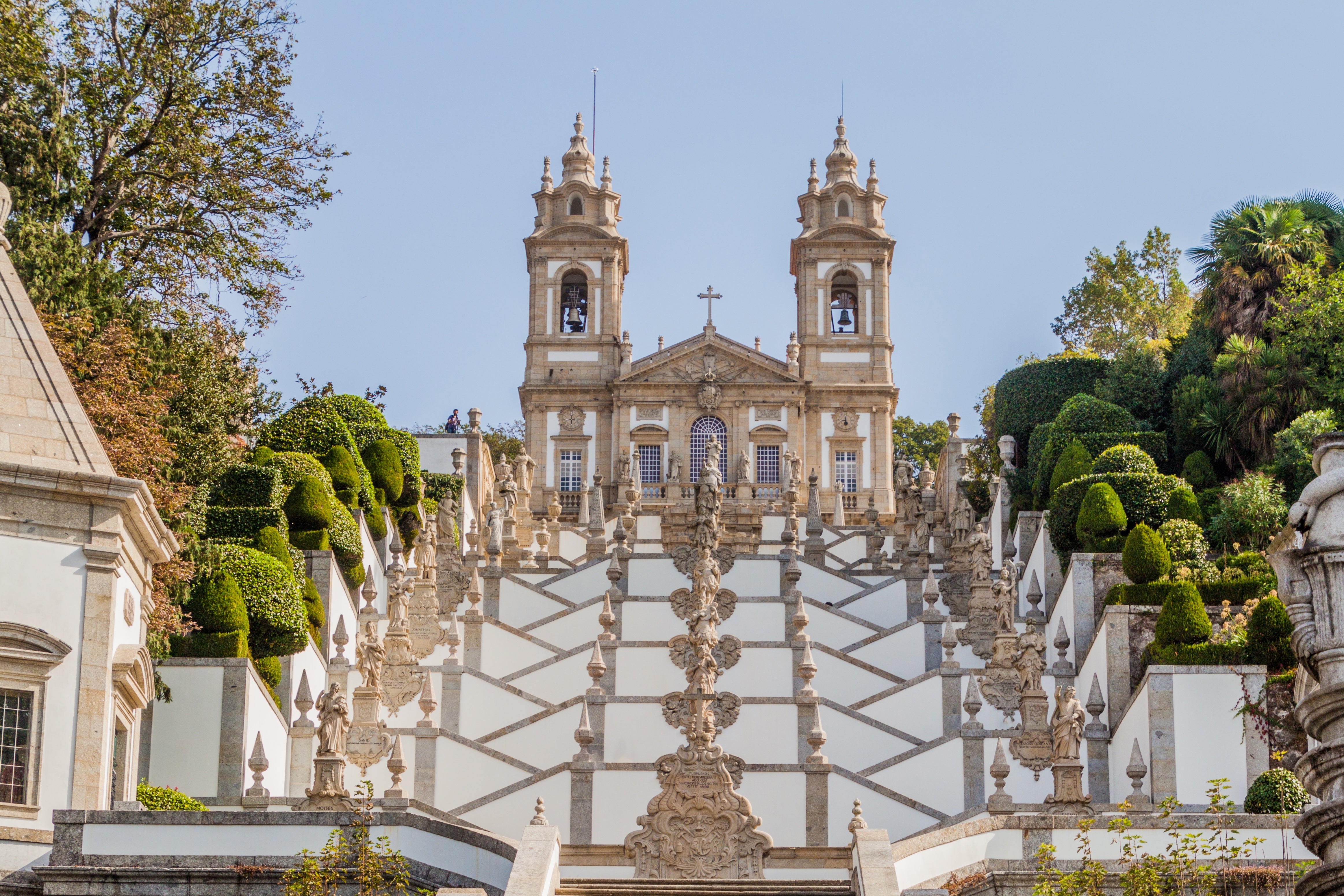
Wandering the streets offers an abundance of beautiful architecture, from the baroque and Gothic cathedral (£2.60) to the Sanctuary of Bom Jesus do Monte, a large Catholic shrine. Away from the landmarks, buildings are often covered with bright blue traditional Azulejo tiles. Be sure to dive into a café along these streets to pick up a slice of frigideira de Braga meat pie.
How to do it
Ryanair, easyJet, British Airways, TAP Air Portugal and more all run flights to Porto, where travellers can catch a 30-minute train to Braga. Flights are cheapest in September from £34.
For an affordable place to stay, Guest House Vila Santa Cruz is a practical choice found in the centre of the Old Town.
Price: From £25
Read more: Why you should swap Lisbon and Porto for this Portuguese city, where a glass of wine costs €2
8. Łódź
- Cost of an inexpensive meal: 38zł (£7.55)
- Cost of a beer: 18zł (£3.60)
- Cost of a coffee: 14.14zł (£2.90)
- Cost of a one-way ticket on public transport: 4.40zł (87p)
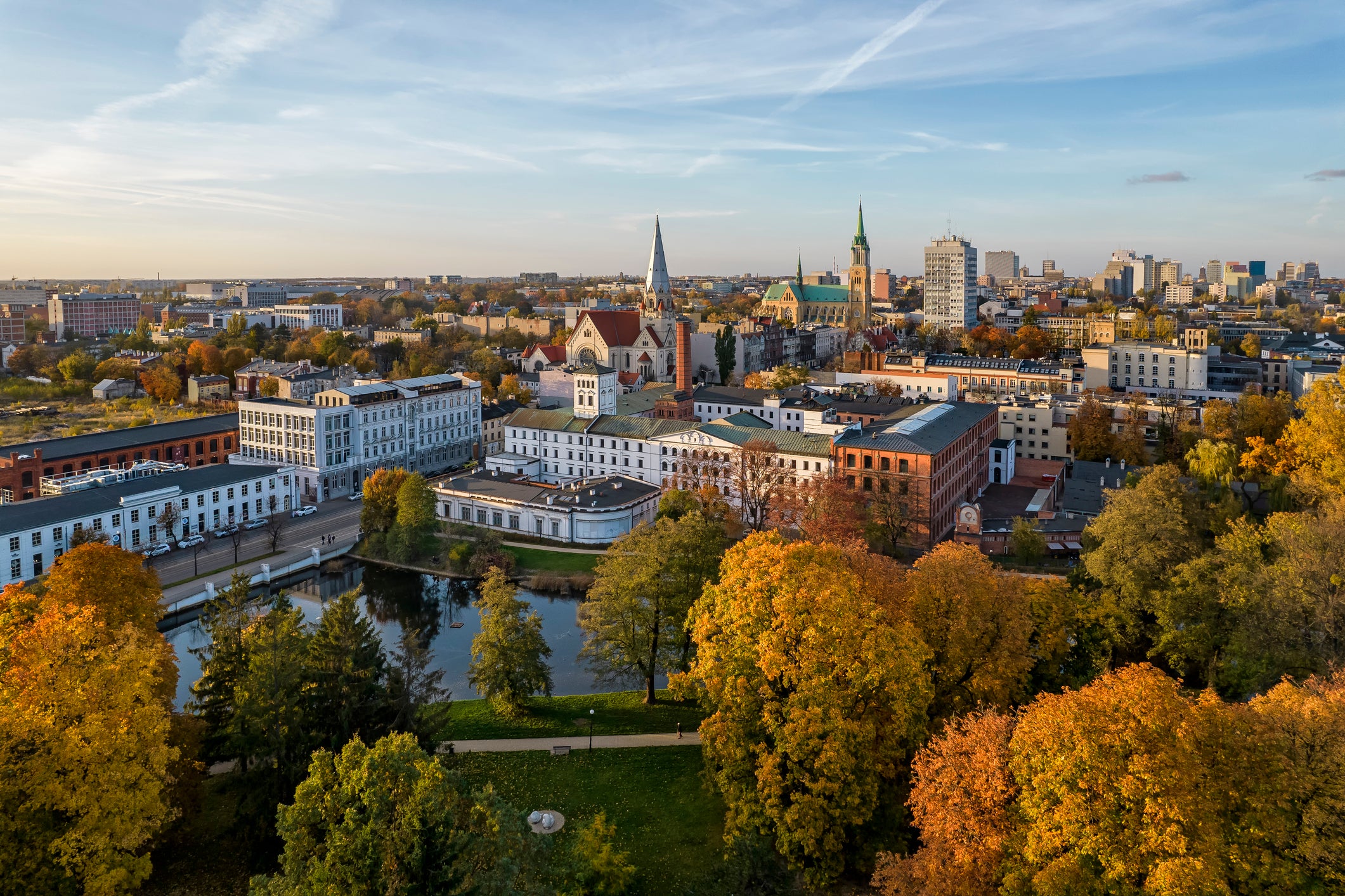
When thinking of a Polish city break, popular destinations such as Warsaw and Kraków usually spring to mind, yet Łódź in central Poland has a lot to offer city explorers alongside being cheaper than the rest. The city has a huge textile manufacturing heritage, remnants of which can be seen at places such as a former red brick factory, which has been transformed into a huge mall and leisure complex called Manufaktura. The shopping and cultural centre has over 250 stores, 50 restaurants, an art gallery, museums, and even an outdoor zipwire across the open courtyard outside. The city has also made use of other former industrial buildings, such as a power plant turned science and art centre, EC1 Łódź, which holds a planetarium, kid-friendly interactive science centre and a museum dedicated to Polish cinema.
Most of the city’s urban palaces across the city were owned by rich textile tycoons, but now mostly house museums. More on the “HollyŁódź” film history can be learned about in the Cinema Museum (£5.50), found in one of these 19th century palaces, which features historic film technology, costumes and a deep dive into how this one factory-focused city became an epicentre of the Polish film industry. Another palace is now the home of MS1 gallery, which showcases 20th-century modern art from the post-industrial creativity boom. Łódź’s continuing creativity has also seeped into other areas of city, as sightseers may spot more than 150 murals painted on the sides of buildings.
How to do it
Fly with Ryanair to Łódź from London Stansted airport. The cheapest time to fly is September, from £28.
Hotel Ibis Łódź Centrum is a cheap and cheerful place to set up camp while exploring the city, with a central location only metres away from Piotrkowska Street, the main thoroughfare of the city, 207 rooms and a 24-hour bar and lounge.
Price: From £41
Read more: The pretty Polish seaside towns nestled against Russia’s ‘dagger’
9. Granada
- Cost of an inexpensive meal: €14 (£12)
- Cost of a beer: €3 (£2.60)
- Cost of a coffee: €2 (£1.70)
- Cost of a one-way ticket on public transport: €1.60 (£1.40)
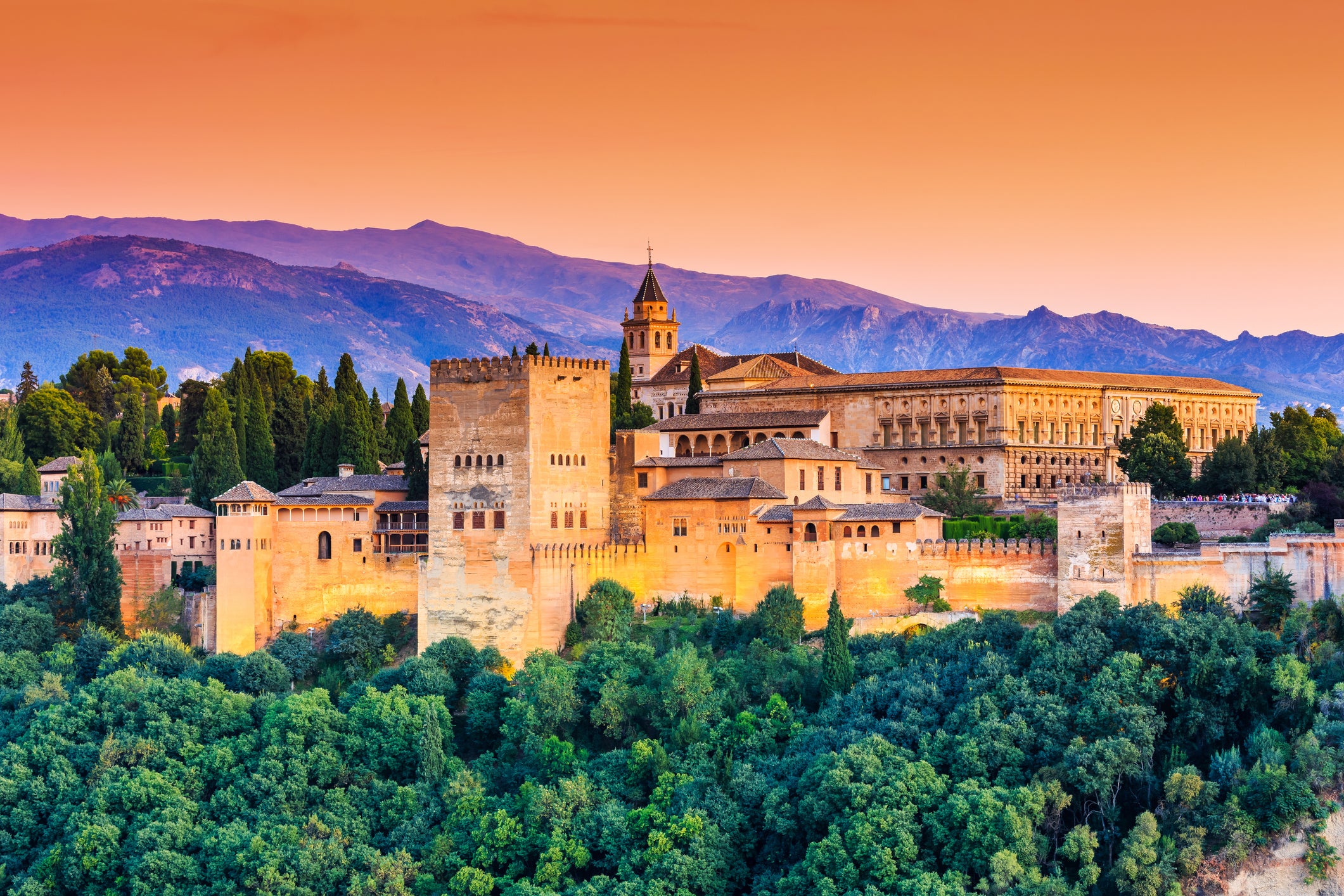
Barcelona and Madrid step aside; the central city of Granada is proving that it is possible to have a Spanish city break without breaking the bank. While the country’s coastlines are one of its biggest bragging points, with warm weather and soft sand, but Spain’s beaches will not cross your mind once you land in the city tucked in the foothills of the magnificent Sierra Nevada mountains. Granada’s UNESCO-protected medieval neighbourhood, the Albaicín quarter, is found on the mountain slopes, where visitors will find Moorish art, architecture and culture, laced together by winding alleys that are free for all to wander around. Next door is the Alhambra, a palace and fortress which is one of the best-preserved examples of historic Islamic architecture built during the 13th and 14th centuries, which can be visited for just over £19.
Granada also has a rich dance culture, with the Roma tradition of Zambra Flamenco honoured with performances in Sacromonte caves, costing around £21 at María la Canastera. The caves became housing for marginalised people in centuries past, more of which can be learned about at the Museo Cuevas del Sacromonte for just over £5, which exhibits eleven caves and what it would have been like to live in them.
How to do it
Wizz Air sells direct flights to Granada’s small airport from Luton airport, however, there are more frequent flights to nearby Malaga airport with many more airlines costing from £28. The cheapest month to fly is in October.
For a cheap place to stay, book a bed at TOC Hostel right next to Granada’s cathedral. Choose from private rooms to bunks, while guests get to enjoy a full kitchen to use, a bar, a restaurant and a common area.
Price: From £12.90
Read more: Barcelona is overcrowded – is it still possible to be a good tourist?
10. Seville, Spain
- Cost of an inexpensive meal: €12 (£10.30)
- Cost of a beer: €2.67 (£2.29)
- Cost of a coffee: €1.69 (£1.45)
- Cost of a one-way ticket on public transport: €1.40 (£1.20)
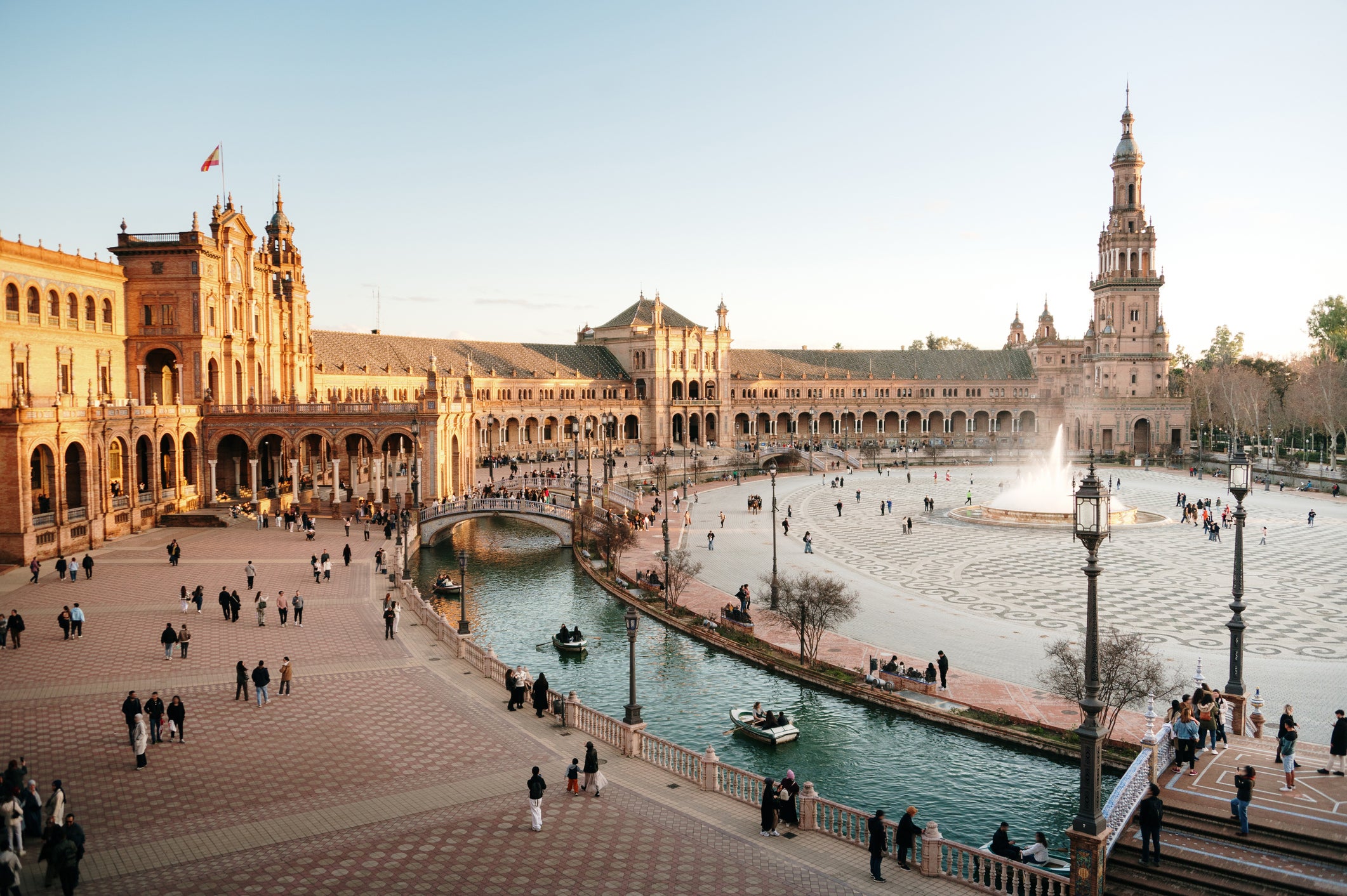
As continental Europe’s warmest city, Seville is easily the best choice for an affordable trip away that also offers hours of sunshine and pleasant, year-round weather. While the heat may be a little unbearable in August for a city as temperatures reach highs of 36C, the winter months still bring balmy walm weather, staying between 16C and 21C.
There are a lot of things to see for free in Seville, including the half-moon-shaped Plaza de España that leads to the large Parque de María Luisa, filled with tiled fountains, ponds, pathways and playgrounds. Be sure to stroll along the Guadalquivir River and into other barrios (neighbourhoods), such as Alfalfa and Arenal, which offer many of the city’s best hotels and bars.
Make the most of Seville’s traditional tapas bars, where small plates of food cost only a few euros. Save the budget for sampling local wines such as Vino de Naranja (orange wine). For more foodie exploration, the fresh food market Mercado de Triana is open everyday but Sunday, where local delicacies are found, such as Iberian jamón (ham), olives and cheese.
How to do it
Vueling, easyJet, Iberia, British Airways and Ryanair offer return flights, with October being the cheapest month to visit (from £34).
For a cheap stay in the city centre, the U-Sense Sevilla Centro hotel is only a few steps away from the cathedral, tapas bars and shopping areas, with cosy rooms to bed down in.
Price: From £157
Read more: Best cheap hotels in Seville for a budget-friendly break in the Spanish city